
The humble door, often grouped under broader considerations like windows and doors, is typically a last consideration in the specification of modern industrial and commercial buildings until it becomes a bottleneck, a safety liability, or even an energy drain. High-speed industrial doors have transformed this once passive structural element into an active component that enhances operational excellence. Their impact on efficiency, safety, and overall building performance is now well documented across industries, from food processing to pharmaceutical logistics.
Operational efficiency is the most immediate benefit. Conventional roller shutter or sectional doors can take 15-30 seconds to cycle between open and closed. Lost seconds in a busy loading bay with hundreds of daily forklift transits, compound into hours of downtime and thermal loss across a quarter. High-speed doors, which normally open in a time range that is more than two metres per second, reduce this cycle time significantly. The decrease in air exchange, in chilled or clean conditions, directly corresponds with the decreased HVAC energy use. In the case of a facility that transports goods across temperatures, a high-speed door would essentially pay itself in terms of energy savings and throughput alone.
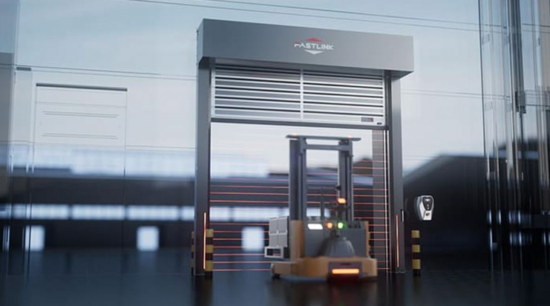
Another dimension that should not be underestimated is safety. Modern high-speed doors are fitted with advanced safety systems, including light curtains, reversible bottom edges, radar-activated opening, and door monitoring sensors, all of which help eliminate the possibility of collisions with personnel and equipment. The door itself is usually made of lightweight, soft materials that are inherently less dangerous to impact than heavy metal panels. The rapid operation reduces the time interval during which a doorway is uncertain partially open and exposed to oncoming vehicles. This is no trivial matter in a busy cross-dock; it can mean the difference between fluid material flow and a near-incident report.
The use in tough industrial settings requires durability and tight control. High-wind, pressure-differential, or frequent-wash down doors that may be engineered to incorporate self-repairing curtains, robust guide tracks, and intelligent control systems capable of sequencing and synchronizing with conveyor lines and airlocks. The most desirable designs keep machine-learned speed profiles to keep wear and tear to a minimum, adapting to traffic density. This technical maturity will shift the high-speed door to a commodity to a specifiable performance asset.
Comparing High speed door companies, specifiers should consider more than the panel price to gauge the benefits of real-life cycle life, and containment ability. High-cycle, high-velocity applications in which a door failure will cause a line to stop have long been targeted by specialist manufacturers like efaflex.vom. Their design strategy that focuses on spiral-drive technology and firmly embedded safety reasoning explains how much the technology had progressed.
The contemporary building envelope has ceased to be a static one. The right high-speed door thinks in collaboration with the logistics chain, closing and opening in strict rhythm, maintaining the climatic conditions inside, and silently protecting the people who pass under it thousands of times in a day.
Related Posts
How to Build a Durable Backyard Patio from Ground Preparation to Concrete Pouring
A backyard patio can add useful outdoor living space, improve…
Understanding Titan PowrLiner Components and Functions
Contractors who work on projects need efficient machinery and equipment.…

Transforming Your Home With Purpose: A Practical Guide to Modern Renovations
When you invest in enhancing your home, you’re not just…