
A lot of yards in the US look the same. Grass, a concrete path, maybe a few shrubs near the front door. Nobody really uses them. Nobody really enjoys them. And the people who own them do not know where to start fixing that.
The kdalandscapetion landscape guide by kdarchitects was built for exactly that situation. It is not a design catalog. It is a practical framework that helps homeowners think clearly about outdoor space before spending money on it.
This article covers seven tips from that guide. Each one is grounded in how real yards actually work, not how they look in photos.
Tip 1: Read Your Yard Before You Plan Anything
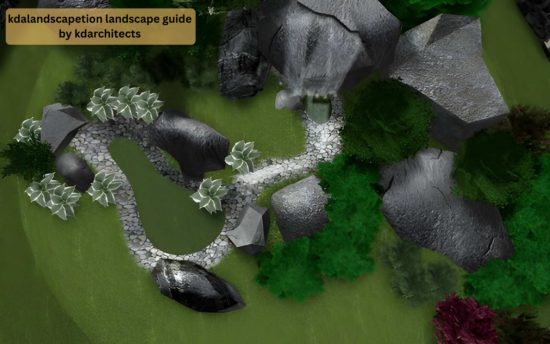
Most people skip this step entirely and pay for it later.
Before you decide on a single plant or surface, spend a few days watching your yard. Where does the sun hit in the morning? Where does shade pool in the afternoon? Which spots stay wet after rain? Where do you already walk without thinking about it?
The kdalandscapetion landscape guide by kdarchitects treats this observation period as the most important part of the whole process. Every decision you make later, from where to place a patio to which plants survive, depends on what your land is already doing.
Skipping it is how you end up with a seating area that nobody uses because it bakes in afternoon sun, or a garden bed that drowns every plant because the soil holds water. Your yard is already telling you what works. You just need to listen first.
Tip 2: Divide Space by Purpose, Not by Looks
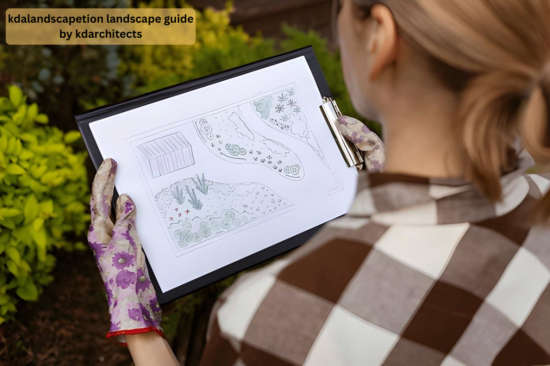
This is where a lot of homeowners go wrong. They think about how a yard should look as a whole instead of what each part of it should do.
Zone-based planning changes that. Think of your yard as a set of outdoor rooms. Your front yard is the public face of your home. Your backyard is where life actually happens. And somewhere in between, there is space for tools, bins, hoses, and everything practical that needs a home.
When each area has a clear job, every decision gets easier. A path makes sense when it connects two zones people actually move between. A planted hedge makes sense when it creates privacy around the seating area. You stop buying things because they look nice and start choosing things because they serve a real purpose.
The kdalandscapetion landscape guide by kdarchitects uses this approach because it works at every scale. A small city backyard and a large suburban property both benefit from knowing what each area is for before anything gets built or planted.
Tip 3: Match Plants to Your Region, Not Your Preferences
People buy plants based on how they look. Then they spend two years trying to keep them alive in the wrong soil, wrong climate, wrong light. It is one of the most common and expensive mistakes in home landscaping.
The better approach is to start with what belongs where you live. Native plants adapted to your specific US region require less water, less maintenance, and fewer chemical inputs. They are also more likely to support local birds and insects, which keeps the whole yard healthier.
The kdalandscapetion landscape guide by kdarchitects recommends a layered planting approach. Canopy trees at the top, shrubs in the middle, ground covers at the base. This mirrors how natural landscapes grow. It reduces bare soil, cuts down on weeds, and creates visual depth without requiring constant attention.
Knowing your USDA hardiness zone before walking into any nursery saves a lot of frustration. A plant thriving in a North Carolina garden may struggle badly in Minnesota. And kdarchitects landscape ideas by roger morph offer solid region-specific guidance for US homeowners working through this exact question.
Tip 4: Sustainability Means Lower Costs, Not Just Good Values
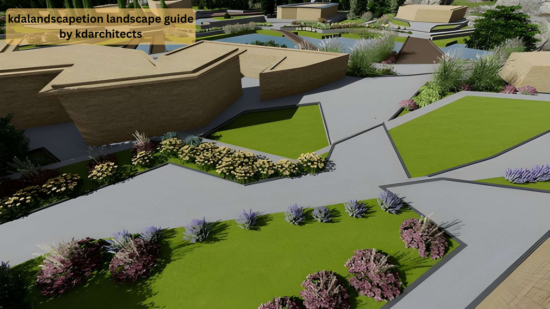
The kdalandscapetion landscape guide by kdarchitects is direct about this. Sustainable design is not just environmentally responsible. It is financially smarter over time.
Water bills are rising across the US. Maintaining a high-upkeep lawn in a drought-prone state is increasingly expensive and, in some areas, increasingly restricted. Designing with sustainability from the start means you spend less maintaining the yard every year after.
Rain gardens capture runoff and let it absorb slowly into the ground rather than pooling or eroding soil. Permeable paving lets rainwater pass through instead of collecting on hard surfaces. Mulch around plant beds reduces evaporation, keeps roots cooler, and cuts watering needs significantly.
None of these require a big budget. They require thinking before building. www. kdarchitects .net covers water-wise design approaches that translate directly to lower maintenance costs across different US climates. But the core idea is simple. Work with how water naturally moves on your property instead of fighting it.
Tip 5: Hardscaping Solves Problems First, Then Looks Good
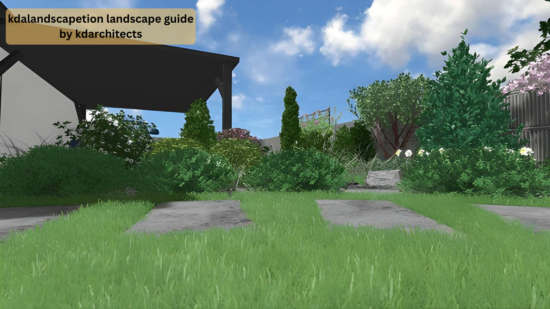
Paths, patios, retaining walls, driveways. Most homeowners think about these in terms of materials and aesthetics. The kdalandscapetion landscape guide by kdarchitects thinks about them differently: as structural choices that shape how the whole yard functions.
A path placed where people do not actually want to walk will be ignored. A retaining wall without proper drainage behind it fails after the first heavy rain season. A patio surface that gets slippery when wet is a problem in a yard where children play.
Material choice matters practically too. Dark surfaces absorb heat and radiate it back, making Southern US patios uncomfortable in peak summer. Cheaper concrete pavers crack in northern freeze-thaw cycles. Locally sourced stone or quality brick ages well and does not need replacing every few years.
Good hardscaping solves real problems. It connects zones people move between. It manages water. It holds slopes. The aesthetics follow from those decisions, not the other way around. That is the approach sustainable and innovative kdarchitects consistently returns to across different project types.
Tip 6: Design for How You Actually Live Outside
A yard that looks good in photos but never gets used is a failed design. The kdalandscapetion landscape guide by kdarchitects pays serious attention to human behavior in outdoor spaces.
Where do you actually go when you step outside? What do you need within reach? Where do you want shade? What do you want to block from view?
Design around those real behaviors first. A seating area with afternoon shade in a hot climate gets used every evening. The same seating area in full sun sits empty. A fire pit with a clear sightline to the back gate works for families watching kids. A path that follows the route people already walk naturally gets used without thinking.
Lighting is something a lot of homeowners overlook entirely. A yard without outdoor lighting loses half its usable hours. Simple low-voltage LED path lights, string lights over a dining area, or a few solar spots near garden beds extend your evening hours outside without any major installation cost.
Privacy matters too. A lot of US yards feel more exposed than they should. A well-placed hedge, a simple trellis with climbing plants, or even a few tall ornamental grasses can create separation and make a space feel genuinely comfortable to be in. The kdarchistyle architecture styles by kdarchitects framework covers how to create that sense of enclosure without making a yard feel closed off or heavy.
Tip 7: The Kdalandscapetion Landscape Guide by KDArchitects Designs for Ten Years From Now
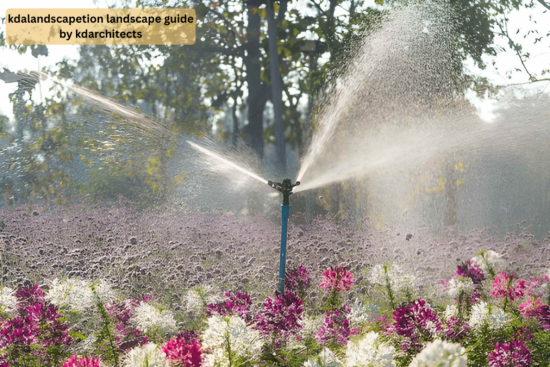
Most people design their yard for how their life looks today. That is a natural instinct. But it is also why so many landscapes get torn out and redone within a decade.
That small tree planted near your patio edge will be a large tree in seven years, with roots pulling up pavers and branches hanging over the whole dining area. The dense hedge that looks tidy at three feet this spring will need trimming every month once it matures. The swing set zone makes perfect sense now and zero sense in ten years.
The guide asks a straightforward question: what does this look like in ten years? That question changes a lot of decisions. It pushes you toward plants with manageable mature sizes, toward flexible layouts that can shift purpose as your household changes, and toward quality materials that do not need replacing every few years.
A cheap plant that dies twice costs more than a native perennial that lives for decades. A poorly installed gravel path that washes out annually costs more than a well-laid permeable paver surface that lasts twenty years. Thinking about total cost over time is something the kdalandscapetion landscape guide by kdarchitects builds into every recommendation.
For more on this long-view thinking, kdarchitects landscape ideas from morph shows how these principles hold across different property sizes and US climate conditions.
Final Thought
The kdalandscapetion landscape guide by kdarchitects keeps coming back to one honest idea. Your yard should work for the people living in it. Read the land. Plan with purpose. Choose plants that belong there. Build sustainably. Use hardscaping to solve real problems. Design around actual behavior. And think past this season.
Related Posts
Advancements immersive experience kdarchitects Redefining Modern Design
Design today is about how a place makes someone feel.…
Landscape KDArchitects Roger Morph
Landscape kdarchitects roger morph is a design approach that treats…

Roger Morph Writer for KDArchitects: 6 Important Roles in Design Communication
Roger Morph Writer for KD Architects is about how writing…