
It’s a scene played out in millions of households every morning: The first person enjoys a spa-like steam. The second person gets a comfortable, albeit shorter, rinse. But by the time the third person steps into the stall, the “Cold Shower Lottery” has been lost. What starts as a promising stream quickly fades into a lukewarm drizzle, leaving you shivering, soap-strewn, and questioning your life choices.
For decades, this was simply an accepted reality of family life—a byproduct of the traditional water tank’s physical limits. But as we move through 2026, a “modern luxury” solution has moved from the fringes of high-end custom homes into the mainstream: the tankless water heater.
Promising an endless supply of hot water and significant energy savings, these sleek, wall-mounted units seem like the ultimate upgrade. However, with a price tag that can be triple that of a standard tank, the big question remains: Is it actually worth it? This guide dives into the technology, the 2026 financial landscape, and the lifestyle perks to determine if the ROI truly outweighs the initial cost.
1. How Tankless Technology Works (And Why It Matters)
To understand why tankless is considered a “green flag” in modern real estate, you first have to understand the inefficiency of what most of us currently have in our basements.
The “Idling Car” Problem
A traditional water heater is essentially a giant, 50-gallon kettle. To ensure you have hot water the second you turn the tap, it keeps those 50 gallons at roughly 120°F (49°C) twenty-four hours a day, 365 days a year. This results in standby heat loss. Even when you’re sleeping, at work, or on a two-week vacation, your heater is firing up periodically to keep that water hot. It’s the energy equivalent of leaving your car idling in the driveway all night just in case you need to drive at 3:00 AM.
Heat-on-Demand
Tankless units operate on an on-demand basis. When you turn on a hot water tap, a flow sensor activates. Cold water travels into the unit, where a high-powered heat exchanger (powered by gas or electricity) flash-heats the water to your desired temperature instantly.
- No Standby Loss: When the tap is off, the unit is completely dormant.
- Endless Flow: Since it heats water as it moves, it never “runs out.” You could theoretically run a shower for 24 hours straight without a drop in temperature.
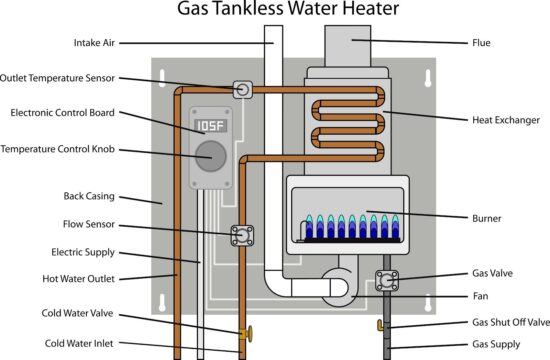
However, these advanced systems require precise calibration to function at peak efficiency. This is where choosing a specialized contractor is vital. For example,West Coast Flow Plumbing is a Navien Certified Installer and features Trutankless Certified specialists. Working with a certified pro ensures that your gas lines, venting, and software integration meet the manufacturer’s strict standards—protecting your warranty and your investment from day one.
Reclaiming Your Square Footage
Beyond energy, there is a physical benefit. A standard 50-gallon tank is a behemoth that occupies significant floor space. By switching to a wall-mounted tankless unit, homeowners typically reclaim 12 to 16 square feet of floor space. In the 2026 housing market, where every square foot counts, that’s enough room to add a pantry, a stackable laundry set, or a dedicated storage closet.
The Financial Breakdown: Upfront Costs vs. Long-Term ROI
The primary hurdle for most homeowners is the “sticker shock.” In 2026, the cost of going tankless is influenced by higher labor rates and specialized venting requirements.
Initial Price Tag
- The Unit: A high-quality whole-house tankless unit typically costs between $1,200 and $3,500 depending on the flow rate (measured in Gallons Per Minute or GPM).
- Total Installation: When you factor in labor and permits, the total “out-the-door” cost for a professional installation usually lands between $3,000 and $6,000.
The “Hidden” Installation Costs
Converting from a tank to a tankless system isn’t always a “plug-and-play” job. You may encounter these common 2026 infrastructure upgrades:
- Gas Line Upsizing ($400–$800): Tankless units require a massive burst of energy to flash-heat water. This often requires upgrading your gas line from a standard 1/2-inch pipe to a 3/4-inch pipe.
- Venting Modifications ($500–$1,000): Gas-powered tankless units produce high-heat exhaust that requires specialized stainless steel or PVC venting through an exterior wall, rather than using your existing chimney flue.
- Electrical Panel Boosts ($1,000–$2,000): If you opt for an electric tankless model, you may need a 200-amp service or additional circuit breakers to handle the significant draw.
The Payback Period
On average, a tankless water heater is 24%–34% more energy-efficient than a conventional tank system. For a typical household, that efficiency translates into approximately $100–$200 in annual utility savings. While the break-even point generally falls between 10 and 15 years, tankless systems are designed to last significantly longer (see Section 5), making them a smart long-term investment for homeowners who plan to stay put.
If pricing still feels unclear, speaking with a licensed Water Heater expert can help you get an accurate estimate and better understand which tankless water heater model best fits your home’s needs.
2026 Tax Credits & Rebates: Cutting the Cost
In 2026, the federal government and local utilities have made the transition more affordable through aggressive “Green Home” incentives.
Federal Incentives (The 25C Credit)
Under the Energy Efficient Home Improvement Credit, homeowners can claim a federal tax credit for 30% of the cost of the unit and installation.
- Gas Models: Generally capped at $600 per year.
- Heat Pump Water Heaters: If you choose a hybrid heat pump model (which combines tank and tankless tech), you may qualify for a credit of up to $2,000.
- Tip: You must use IRS Form 5695 to claim this credit. Always ensure the model you buy is Energy Star Certified to remain eligible.
Local Utility Rebates
Many local gas and electric companies offer instant rebates to reduce the strain on the energy grid. In 2026, it is common to find “point-of-sale” rebates ranging from $200 to $500. Some states, like California and New York, offer even higher incentives for homeowners switching from electric tanks to high-efficiency gas or heat pump models.
Lifestyle & Performance: Is the “Endless Shower” Real?
While the financial data is important, most people buy tankless for the lifestyle upgrade.
The Infinite Supply
If you have a household of four or more, the benefits are immediate. You can run the dishwasher, the washing machine, and two showers simultaneously without the “water pressure/temperature anxiety” that plagues older homes.
2026 Smart Home Integration
Modern units now come standard with Wi-Fi connectivity. Through apps or voice commands (Alexa/Google Home), you can:
- Adjust your water temperature to the exact degree.
- Receive leak detection alerts on your phone if a pipe bursts.
- Track your exact energy and water usage in real-time.
The “Cold Water Sandwich”
A common complaint with older tankless units was a 10-second burst of cold water if you turned the tap off and back on quickly. In 2026, top-tier models (like the Navien NPE-2 or Rinnai Sensei series) have solved this with internal recirculation pumps. These pumps keep a small amount of hot water moving through the pipes, ensuring “instant” heat at the faucet.
Maintenance Realities: It’s Not “Set It and Forget It”
A tankless water heater is a precision machine, and like a luxury car, it requires routine service to stay efficient.
- Annual Flushing: If you live in a “hard water” area, calcium and magnesium will eventually build up inside the heat exchanger. You must “flush” the unit once a year with a descaling solution. A professional service visit usually costs $150–$300, though many homeowners do this themselves with a $150 DIY kit.
- Longevity: This is where the tankless unit shines. A standard tank usually lasts 8–12 years before the bottom rusts out. A tankless unit has an average lifespan of 20 years or more.
- Modular Design: When a standard tank leaks, it’s garbage. When a tankless unit has an issue, you can typically replace a specific sensor, heating element, or circuit board, extending the life of the overall system indefinitely.
Resale Value: Do Homebuyers Actually Care?
In the 2026 real estate market, a tankless water heater is a major “green flag.” It signals to a potential buyer that the home has been modernized and that they won’t have to worry about a massive plumbing failure for two decades.
The “Green” Premium
Data from Zillow and Realtor.com indicates that homes with “energy-efficient” or “tankless” keywords in the listing sell up to 20% faster. In competitive markets, these upgrades can add a 3% to 5% premium to the final sale price. For a $400,000 home, that’s an extra $12,000 to $20,000 in value—more than double the cost of the unit itself.
Is a tankless water heater worth it? The answer depends entirely on your “Homeowner Profile.”
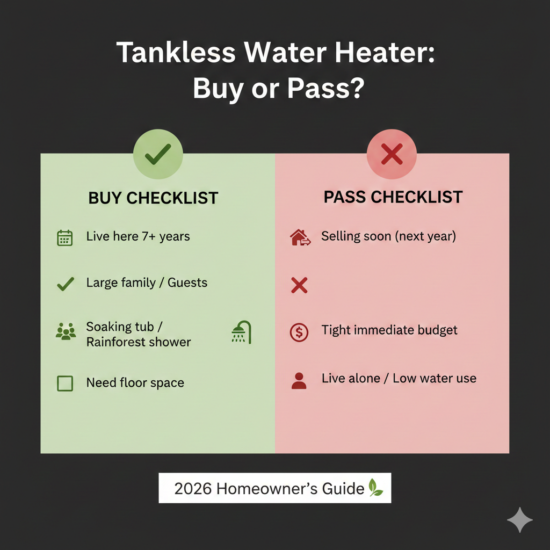
The “Buy” Checklist
- You plan to stay in your current home for 7+ years.
- You have a large family or frequently host guests.
- You have a large soaking tub or “rainforest” showerhead.
- You need to reclaim floor space in a basement or utility closet.
The “Pass” Checklist
- You are planning to sell your home next year.
- You have a very tight immediate budget and your current tank is still working.
- You live alone in a small condo with low water demand.
Final Thought: In 2026, the tankless water heater has transitioned from an expensive experiment into a standard for the modern home. While the entry cost is high, the combination of tax credits, energy savings, and the pure luxury of never running out of hot water makes it one of the few home improvements that pays dividends in both capital and comfort.