
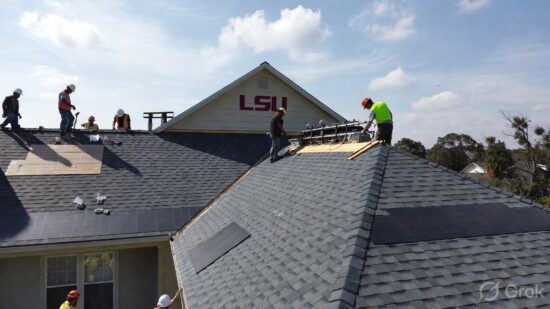
Louisiana State University’s commitment to addressing real-world challenges extends to the roofs over Baton Rouge residents’ heads. Through cutting-edge research at the LSU AgCenter and College of Engineering, scientists are developing roofing materials and systems specifically designed to withstand the unique challenges of Louisiana’s climate. This research is translating into practical benefits for homeowners across the region.
The LSU AgCenter’s Building Science Program
The LSU AgCenter has long recognized that Louisiana’s climate demands building materials engineered for local conditions. Their building science program brings together researchers from multiple disciplines to study how roofing systems perform in the state’s challenging environment.
Field testing facilities at the AgCenter expose various roofing materials to real-world conditions while collecting detailed performance data. Temperature sensors, moisture meters, and weather stations create comprehensive records of how different products respond to Louisiana’s heat, humidity, and severe weather.
This research has revealed important insights about material performance. For example, studies have documented how different shingle formulations resist thermal cycling, the repeated expansion and contraction that occurs as roofs heat during the day and cool at night. Materials that perform well in laboratory testing sometimes fail prematurely when exposed to Louisiana’s intense solar radiation and high humidity.
The AgCenter’s work extends beyond material testing to system-level performance. Researchers study how roofing integrates with attic ventilation, insulation, and HVAC systems to affect overall building performance. This holistic approach recognizes that roofing is part of a complex system that determines comfort, efficiency, and durability.
Hurricane Resistance Research
LSU’s hurricane research has direct implications for roofing performance. The Hurricane Center at LSU conducts wind tunnel testing and field investigations to understand how roofing systems respond to extreme wind events.
This research has informed building code development and product testing protocols. Understanding how wind flows over roof geometries helps engineers design systems that resist uplift forces more effectively. The complex aerodynamics of roof corners, ridges, and eaves have been studied in detail, revealing why these areas are particularly vulnerable during hurricanes.
Field investigations following major storms provide real-world validation of laboratory findings. LSU researchers document damage patterns, analyze failures, and identify factors that contribute to roof performance. This information helps manufacturers improve products and guides homeowners in making better roofing choices.
The university’s work has contributed to the development of enhanced fastening patterns, improved underlayment systems, and better flashing details. These advances, while sometimes invisible to homeowners, significantly improve roof performance during severe weather.
Cool Roofing Research
Baton Rouge’s hot summers create substantial cooling loads that strain both household budgets and the electrical grid. LSU researchers have studied how cool roofing materials can reduce these impacts while maintaining durability in Louisiana’s challenging climate.
Studies have documented the energy savings potential of reflective roofing in Baton Rouge’s climate. By reflecting solar radiation rather than absorbing it, cool roofs can reduce roof surface temperatures by 50 degrees Fahrenheit or more. This temperature reduction translates directly into lower cooling costs and improved indoor comfort.
However, the research has also identified challenges with cool roofing in humid climates. Reflective surfaces can show dirt and algae growth more readily than darker materials, potentially reducing performance over time. LSU studies have evaluated different coating technologies and cleaning protocols to address these concerns.
The university’s research supports the development of cool roofing products specifically formulated for Gulf Coast conditions. These materials balance reflectivity with durability, providing energy benefits without compromising longevity.
Moisture and Mold Research
Louisiana’s humidity creates ideal conditions for moisture problems in roofing systems. LSU researchers have studied how moisture moves through roof assemblies and how to design systems that manage humidity effectively.
This research has revealed the importance of proper attic ventilation in preventing moisture accumulation. Studies have documented how different ventilation strategies affect humidity levels, mold growth, and material degradation. The findings support recommendations for ventilation rates and configurations suited to Louisiana’s climate.
Mold research at LSU has identified the species most commonly found in roofing systems and the conditions that promote their growth. This knowledge helps in developing prevention strategies and remediation protocols when problems occur.
The university’s work on moisture management has influenced building codes and industry best practices. Proper vapor barrier placement, ventilation requirements, and material selection all reflect research findings about moisture behavior in humid climates.
Translating Research into Practice
The ultimate measure of research value is its impact on practice. LSU’s roofing research reaches homeowners through multiple pathways, from building code development to contractor education.
Building codes in Louisiana increasingly incorporate research findings about roofing performance. Requirements for wind resistance, moisture management, and energy efficiency reflect the university’s contributions to understanding local conditions. These code improvements raise the baseline for roofing quality across the state.
Contractor education programs disseminate research findings to the professionals who install roofing systems. A knowledgeable Baton Rouge roofing contractor can apply research insights to improve installation quality and help homeowners make informed product selections.
Manufacturer partnerships accelerate the translation of research into commercial products. LSU collaborations with roofing material companies help bring new technologies to market more quickly, benefiting homeowners through improved product performance.
What This Means for Homeowners
LSU’s roofing research provides homeowners with confidence that the materials and systems protecting their homes are grounded in scientific understanding of local conditions. When selecting roofing products, look for evidence that they have been tested and proven in Louisiana’s climate.
Homeowners planning a new roof Baton Rouge project can benefit directly from these research findings. Materials designed and tested for Louisiana’s heat, humidity, and storm conditions tend to perform better and last longer than generic options developed for milder climates.
Ask contractors about their familiarity with research-based best practices. Professionals who stay current with developments in roofing science can provide better recommendations and installation quality. Their knowledge of proper ventilation, moisture management, and wind resistance strategies helps ensure optimal roof performance.
Consider the source of roofing advice and products. Recommendations backed by local research are more likely to address the specific challenges your roof will face. This is especially important when investing in a new roof Baton Rouge homeowners expect to last for decades in a demanding Gulf Coast climate.
The Future of Roofing Research
LSU continues to advance roofing science through ongoing research programs. Current projects address emerging challenges like increasingly severe weather, changing energy codes, and sustainability concerns.
Research into resilient roofing systems aims to develop materials and designs that can withstand more intense hurricanes while maintaining affordability. This work addresses the reality that climate change is increasing the severity of storms threatening Louisiana.
Sustainability research explores how roofing can contribute to environmental goals through recycled content, recyclability, and extended service life. These considerations are becoming increasingly important as homeowners seek to reduce their environmental footprint.
The integration of smart technologies into roofing systems represents another frontier. Sensors that monitor roof conditions, detect leaks, and optimize performance may become standard features in future roofing systems.
LSU’s commitment to roofing research serves Baton Rouge homeowners by advancing the science behind the materials protecting their homes. This research investment, supported by public funding and industry partnerships, delivers practical benefits that improve comfort, reduce costs, and enhance durability. As the university continues its work, homeowners can expect continued improvements in roofing performance tailored to Louisiana’s unique challenges.