
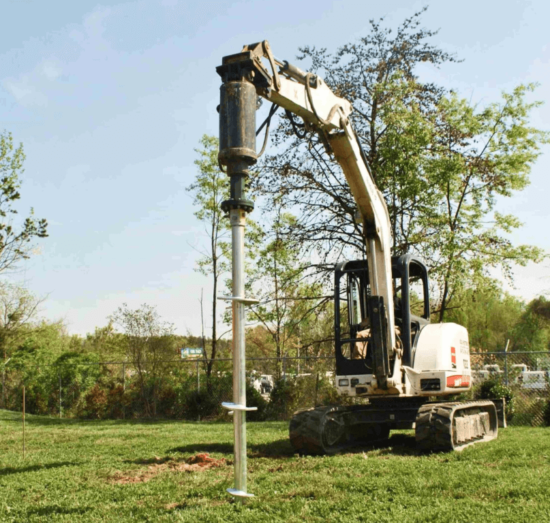
Most foundation conversations start with soil, concrete, drainage, and whether a structure will settle. The frustrating part is that many problems don’t begin underground at all. They begin where loads transfer, where connections are improvised, and where small shortcuts stack up.
If you are exploring an addition, a new deck, a porch rebuild, or a tight-access retrofit, it helps to understand what helical pier installation solutions look like in real life. Not as a buzzword, but as a system of steel, brackets, and verified capacity that has to connect cleanly to the framing you already have.
Why foundations go wrong before the first footing is poured
On many lots, the challenge is rarely a single issue. It is a mix of variable soils, tight access, freeze-thaw movement, and concentrated point loads at posts and corners. Shallow concrete footings can work well when conditions are uniform. When they are not, the “simple” approach can quietly become the risky one.
Helical piles are often selected because they can transfer loads past weaker upper soils to more stable layers below.
What a helical pile is actually doing underground
A helical pile is a steel shaft with one or more helical plates that is rotated into the ground until it reaches a target resistance and depth. During installation, torque is measured as the pile advances, and that data can be correlated to capacity when done properly.
Two practical takeaways:
- Capacity is not a guess. It is something you can document.
- The pile is only half the story. The connection hardware is what turns capacity into performance.
The loads you should be thinking about, not just “weight”
Foundations deal with multiple forces, and helical pile systems are commonly designed to account for them:
- Compression: the downward load of the structure
- Uplift: forces that pull upward, including wind and frost-related movement
- Lateral loads: side forces from soil movement, slope pressures, or how a structure is braced
If your plan only talks about “how much it can hold,” you are missing part of the picture.
Where helical piles tend to make life easier
Additions that must move with the existing house
If the new side settles differently, you will see it in drywall cracks, sticking doors, and sloped transitions. Helical piles can reduce the chance of differential settlement by anchoring to more reliable bearing strata when the upper soils are inconsistent.
Decks and porches that keep losing to frost movement
Outdoor structures live in the zone where moisture swings and freeze-thaw cycles are most aggressive. Helical piles are commonly installed to extend below frost-affected soils and resist heave. They can also be installed year-round, including in cold conditions where concrete placement and curing are tougher to manage.
Tight access, low disruption retrofits
When excavation is messy or access is limited, helical piles can be attractive because they typically need far less digging than full footing trenches.
When they may not be the first choice
Helical piles are versatile, but they are not a universal fit. Sites with frequent boulders or very dense layers may need predrilling, a different pile point, or an alternate foundation approach. Some structures also have unusual lateral demands or exposure conditions that call for specific corrosion protection and detailing.
The point is not to talk you out of piles. It is to remind you that a good foundation decision is a matching exercise: soil conditions, load demands, access, and what the structure needs to do over decades, not just on install day.
The connection details that decide the outcome
Bracket choice is structural, not cosmetic
Different projects use different termination hardware: post brackets for decks, foundation brackets for underpinning, and caps for beams. The bracket has to match the load path and the forces involved. A great pile with the wrong connection can still move, twist, or squeak.
Load paths should be continuous and obvious
A load path is the route the forces travel from framing to soil. With piles, it is typically framing to beam, beam to bracket or cap, bracket to pile, pile to bearing layer.
If any link in that chain is improvised on site, you can end up with beam roll, post rotation, and that springy feeling that seems like a framing problem but is really a support problem.
Spacing is an engineered decision
Spacing should be driven by beam size, joist span, tributary area, and live loads. On additions, it also depends on where concentrated loads land, especially at corners and large openings.
Lateral stability needs a plan
Vertical piles carry vertical load. Side-to-side stability often comes from bracing, grade beams, or how the structure is tied together above. For decks, that might mean diagonal bracing and solid ledger attachment. For additions, it might mean shear walls, rim details, and proper framing ties.
What installation day should include
A good helical pile install can be fast, but it should feel controlled. Expect layout confirmation, torque monitoring during installation, cutting to elevation, and installing the specified brackets or caps, with documentation that shows what was installed and verified.
Foundations are systems, so coordinate early
Helical piles solve a load transfer problem. They do not automatically solve water management, insulation, or durability. For additions and retrofits, coordinate piles with drainage and grading, waterproofing near existing walls, and air sealing where the new structure meets the old.
Helical piles are used in Canada under code-recognized frameworks, but documentation and inspection expectations can vary by project and permit authority.
Questions that prevent expensive surprises
Before you commit, ask questions that force clarity:
- What loads are you designing for, including uplift and lateral forces?
- How will torque or other verification be recorded and shared?
- What bracket type is specified, and what does it connect to in my framing?
- What is the plan if an obstruction is encountered where a pile is meant to go?
- Who is coordinating field changes with permit drawings and inspections?
A foundation that feels boring is usually the best kind
The best helical pile foundations are the ones you forget about. Floors feel level. Decks feel firm. After a winter or two, nothing “settles in” because the support was designed, verified, and connected correctly from day one.
Helical piles can be a smart choice for building foundations, especially on sites where shallow footings face a lot of variables. But the real win is not just the pile in the ground. It is attention to load paths, connection details, and verification that turns a fast install into long-term confidence.
Related Posts
Strategic Cost Forecasting and Resource Planning for Modern Construction
Strategic value forecasting and aid planning have turned out to…
Practical On-Site Storage Solutions for Growing Construction Projects
When you’re managing a construction project, one of the biggest…
How to Find the Right Spray Foam Insulation Contractor in Your Area
The selection of appropriate insulation is a very important issue…