

Summer in Washington DC is a nightmare. With high heat and high humidity, summer weather can be miserable for all renters and stressful for landlords when they hear complaints from tenants.
Instead of just blasting the air conditioning and having your utility bills skyrocket, there are five easy things that you, as a renter or landlord, can do to make your rental unit cooler without breaking the bank.
Read these simple tips to cool down your apartment, which may help result in happy tenants and fewer emergency maintenance requests.
5 Tips to Cool Down Your Apartment
During those hot days of summer, making small changes can make a major impact. Follow these simple tips below to help you create a cooler, more comfortable home, all for less than you spend at the movies.
1. Block the Sun with Window Treatments
Using blackout curtains, or a UV Film on your windows, or even applying a removable window tint will block the heat from entering. Pull down your curtains as much as possible when the sun is at its highest, especially if your windows face South or West, to block the sun’s rays, yet still allow natural light into your apartment.
Check with your landlord about using these types of window treatments, as they are usually considered a “Temporary” application, which won’t cause any damage to your windows, and are great for cooling your apartment immediately.
2. Create Cross-Breezes with Fans
Use an oscillating fan (or a box fan) on opposite sides of your house as a cross-breeze system by placing one outside an open window and the other inside that same room. The fan will blow warm air toward the outside and cold air toward you.
This low-cost solution does make a difference in temperature drop. It’s especially effective in cities like Washington D.C., which are warmer during the day and can be cooler at night.
3. Seal Out the Heat
Hot air leaks from windows and doors through minuscule openings. If approved by your landlord, seal those gaps with weatherstripping or a draft stopper. Even a rolled towel under a door can block an astonishing amount of heat. To be most effective in sealing off hot air, focus on sealing gaps that do not require ventilation.
4. Use Appliances Strategically
Your oven, dryer, and dishwasher are all major heat producers. Consider running them when it is coolest, usually at night, or consider grilling outside on your balcony if allowed. Limit your cooking to no-cooking methods on extremely hot days. The less heat you generate, this allows your apartment will be more pleasant than using the thermostat.
5. Add Greenery for Natural Cooling
Greenery such as potted plants can be used on balconies or by sunny windows to create shade that cools the air through the process of transpiration. Leafy tall plants are most effective at this task.
Shade sails or awnings (depending on local rules) in lighter fabrics also help block sunlight from reaching your glass. Nature is an inexpensive and energy-saving way to reduce heat gain.
Read more about these apartment cooling tips for better sleep and higher productivity as the weather gets warmer.
Importance of Keeping an Apartment Cool
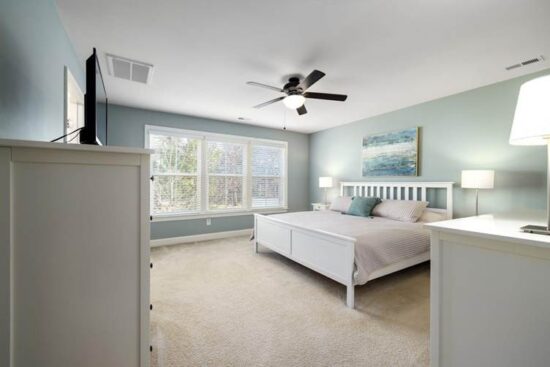
Image Alt Text: Fan over Bed in Bedroom
High temperatures mean uncomfortable tenants, which can impact a landlord’s bottom line. Here are reasons that keeping units cool benefits both the landlord and the renter.
Protect Fixtures and Finishes
Not just humans are damaged by heat and humidity. Wood floors buckle, paint blisters, kitchen cabinetry swells, and appliances become worn out from prolonged overheating. Bathrooms and kitchens that do not have good air circulation begin to grow mold and mildew very quickly.
By keeping your units at reasonable temperatures, you will protect your physical belongings (fixtures & finishes) and also save money in replacement costs for items between each tenant.
Improve Tenant Satisfaction
No complaint has a greater impact than an extremely hot unit. If the heat is making it impossible to sleep, to work at home, or simply be comfortable, they won’t renew their lease. Also, they’ll post negative reviews of your property.
Maintaining a reasonable temperature in each unit, such as controlling temperature spikes with swinging doors, shows that you are concerned about the well-being of your tenants. This results in happy tenants, which leads to renewed leases, timely rent payments, and better treatment of your property.
Reduce Maintenance Complaints
High temperatures cause service requests for AC failures, jammed windows (stuck) caused by swelling wood frames, and service requests for any temperature above comfortable. With proactive cooling strategies and a properly maintained system, there are fewer emergency service calls, lower costs for vendors, and less pressure on your property manager.
Prevent Mold and Moisture Issues
The combination of heat and humidity in Washington D.C. provides an ideal environment for mold growth, particularly in bathrooms, kitchens, and basements. Once mold is established, remediation can be costly and extremely invasive. Proper ventilation and cooling will help prevent moisture buildup, which ultimately will lead to health complaints, potential liability, and expensive repairs.
Maintain Property Reputation
The word gets around. If a rental building has an unlivable summer climate, it will be difficult to rent. Tenants are likely to have conversations with their neighbors about the comfort of their unit. The unit will also be mentioned in online reviews.
Maintaining a comfortable living space will protect your property from developing a negative image within the D.C. area rental market, allowing you to attract quality tenants who will stay longer and create fewer issues for you as a landlord.
Conclusion
Cooler apartments mean happier renters, fewer maintenance requests, and preservation of existing appliances. These simple techniques will help with window coverings, fans, caulk & sealants, using energy-efficient appliances, and house plants.
Both landlords and rental managers benefit when renters are happy; happy renters tend to rent longer and complain less. Ask your rental manager in Washington DC for a copy of the annual AC inspection report to get ahead of this summer’s heat.